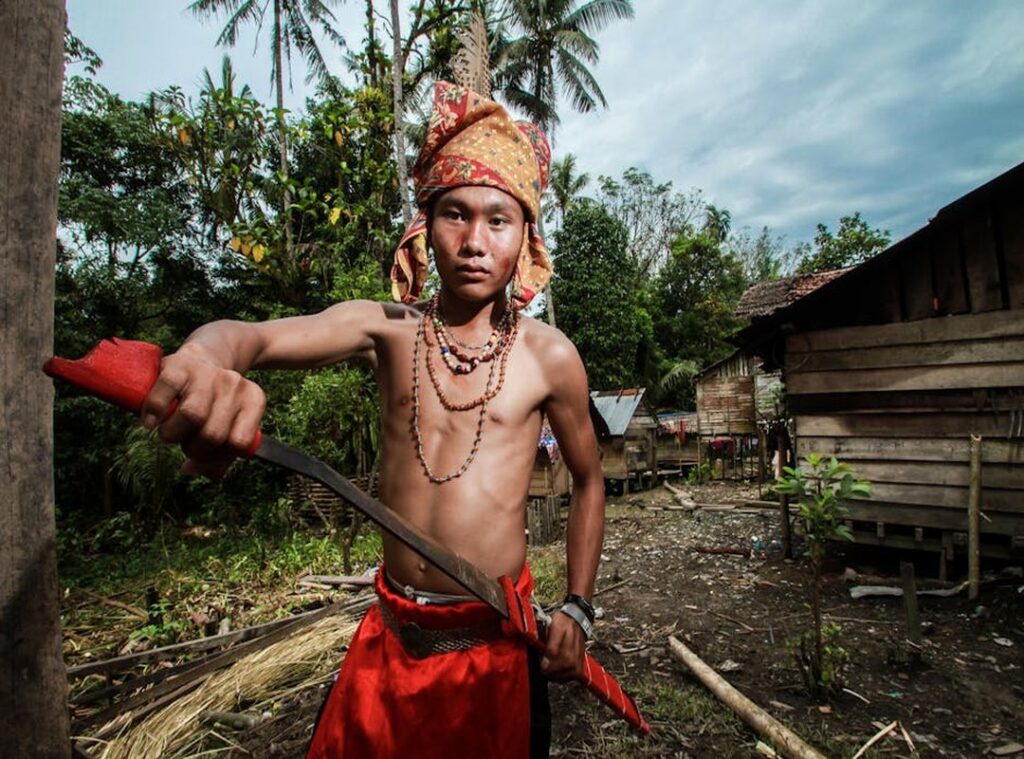
Imagine a strong, sinewy arm, wrapped in intricate blackwork patterns that tell a story centuries old. These aren’t just tattoos; they’re dayak tattoo iban di lengan—a tradition rich with history and meaning.
I’m here to dive into the deep cultural significance, powerful symbolism, and modern artistic interpretations of these designs. Whether you’re of Dayak heritage or simply an admirer, understanding the roots is key.
What do these tattoos mean? Why are they so important? I’ll get into all that.
You might be thinking about getting one yourself. Before you do, there’s a lot to consider. Let’s explore this together.
A Journey Etched in Skin: The Cultural Roots of Iban Tattooing
Pantang, or tattoos, were not just decorations for the Iban people. They were a sacred, visual record of a person’s life journey, status, and achievements.
- The Historical Context of Pantang
- The Bejalai Rite of Passage
- Spiritual Significance and Protection
- Traditional Hand-Tapping Technique
- The Arm as a Canvas
The Bejalai was a traditional rite of passage where a young Iban man would travel to gain knowledge and experience. He earned his tattoos as proof of his accomplishments. These tattoos were a way to show what he had learned and achieved.
Spiritually, these tattoos were believed to provide protection from malevolent spirits. They also acted as a torch to guide the soul to the afterlife, known as Sebayan. It’s fascinating, but I must admit, the exact spiritual mechanics are a bit murky.
Still, the belief was strong and deeply rooted.
The traditional hand-tapping technique used tools made of bamboo and bone with soot-based ink. This process was ritualistic and painful. It required immense endurance and was a testament to one’s strength and dedication.
The arms, shoulders, and hands were primary canvases. These areas were chosen because they were visible markers of a man’s identity and standing within his community. The dayak tattoo iban di lengan, for example, was a clear sign of a man’s achievements and status.
Understanding these traditions helps us appreciate the deep cultural significance of Iban tattooing. It’s more than just art; it’s a living history etched into the skin.
Decoding the Designs: Common Symbols on Iban Arm Tattoos and Their Meanings
Iban arm tattoos, or dayak tattoo iban di lengan, are rich in symbolism and tradition. Each design tells a unique story.
The Bunga Terung (Eggplant Flower) is typically placed on the shoulders as the first tattoo. It symbolizes the beginning of the Bejalai, a rite of passage, and represents strength and protection.
The central spiral, known as Tali Nyawa, represents the life cycle. It’s a powerful symbol that connects the wearer to their ancestors and the natural world.
Protective motifs like the Ketam (Crab) or Kala (Scorpion) are often found on the forearms or hands. These symbols are believed to ‘pinch’ or ward off evil spirits and danger. They’re a reminder of the protective forces in our lives.
Powerful animal motifs like the Naga (Dragon) or Aso (Dog-Dragon) represent spiritual guidance, high status, and protection. These creatures are often depicted wrapping around the forearm, adding a layer of mystique and power.
Geometric and natural patterns, such as hook-like designs (Kait) and plant-based motifs like fern tendrils (Paku), signify a deep connection to the natural world and the jungle environment. These designs are not just decorative; they reflect the Iban people’s intimate relationship with nature.
The specific combination and placement of these symbols on an arm tell a unique, personal story of the wearer’s life, experiences, and achievements. Each tattoo is a narrative, a visual diary of one’s journey and the challenges they’ve overcome.
Understanding these symbols gives us a deeper appreciation of the Iban culture and the significance of their traditional art forms.
From Tradition to Trend: The Evolution of Iban-Inspired Tattoos
Traditional Iban tattoos follow strict rules. They have specific placements and deep cultural meanings. Modern ‘Iban-inspired’ pieces, on the other hand, adapt the aesthetic for a contemporary context.
Traditional vs. Modern: A Side-by-Side Look
In traditional Iban culture, each tattoo tells a story. It might symbolize a rite of passage or a significant life event. Modern interpretations, though, often focus more on the visual appeal.
These designs blend classic Iban blackwork with modern techniques like dotwork, shading, or minimalist versions of the symbols.
Contemporary artists are creative. They use Iban motifs in arm tattoos, creating flowing armbands, half-sleeves, or full sleeves. These designs are visually striking but don’t always adhere to the strict traditional narrative.
Dayak tattoo iban di lengan is a popular choice. It combines the bold, graphic nature of Iban designs with a modern twist. This style resonates with many tattoo enthusiasts globally.
Cultural Appreciation vs. Appropriation
It’s important to approach Iban-inspired tattoos with respect. Research the meanings behind the symbols. Choose an artist who honors the culture.
Don’t just pick a design because it looks cool. Understand its significance.
The global appeal of Iban designs is no surprise. They’re bold, graphic, and deeply symbolic. People from all walks of life find these designs powerful and meaningful.
If you’re considering an Iban-inspired tattoo, do your homework. Find an artist who understands and respects the tradition. And if you’re looking for some inspiration, check out creative weeknight meals using pantry staples.
Okay, that’s a bit off-topic, but hey, we all need a break from serious stuff sometimes, right?
Choosing Your Path: What to Know Before Getting an Iban-Inspired Arm Tattoo
Getting a Dayak tattoo iban di lengan is a big decision. You need to find the right artist. Look for someone who specializes in tribal or cultural blackwork.
Their portfolio should show they know Dayak patterns.
Discuss your ideas with the artist. Talk about the specific symbols you like and their meanings. Work together to create a design that respects the tradition.
Placement matters. The tattoo should flow with your arm’s musculature. Consider options like forearm bands, shoulder caps, or full sleeves.
Intricate blackwork takes time. Be prepared for a long session. Pain levels vary.
The inner bicep and elbow can be more sensitive.
- Choose an experienced artist.
- Discuss symbols and meanings.
- Decide on the best placement.
- Be ready for a lengthy process.
Aftercare is crucial. Follow specific tips to keep the lines and patterns crisp, dark, and vibrant. This ensures your tattoo looks great for years.
Wearing a Legacy on Your Sleeve
dayak tattoo iban di lengan is far more than a design; it’s a direct connection to a rich history of storytelling, courage, and spirituality. By understanding the deep meaning behind the symbols, one can wear this powerful art form with the respect and admiration it deserves. The tattoo transforms the arm into a canvas of personal legacy and cultural reverence.
 Ask Jorveth Eldricson how they got into meal planning and preparation and you'll probably get a longer answer than you expected. The short version: Jorveth started doing it, got genuinely hooked, and at some point realized they had accumulated enough hard-won knowledge that it would be a waste not to share it. So they started writing.
What makes Jorveth worth reading is that they skips the obvious stuff. Nobody needs another surface-level take on Meal Planning and Preparation, Nutrition and Wellness Insights, Recipe Ideas and Cooking Techniques. What readers actually want is the nuance — the part that only becomes clear after you've made a few mistakes and figured out why. That's the territory Jorveth operates in. The writing is direct, occasionally blunt, and always built around what's actually true rather than what sounds good in an article. They has little patience for filler, which means they's pieces tend to be denser with real information than the average post on the same subject.
Jorveth doesn't write to impress anyone. They writes because they has things to say that they genuinely thinks people should hear. That motivation — basic as it sounds — produces something noticeably different from content written for clicks or word count. Readers pick up on it. The comments on Jorveth's work tend to reflect that.
Ask Jorveth Eldricson how they got into meal planning and preparation and you'll probably get a longer answer than you expected. The short version: Jorveth started doing it, got genuinely hooked, and at some point realized they had accumulated enough hard-won knowledge that it would be a waste not to share it. So they started writing.
What makes Jorveth worth reading is that they skips the obvious stuff. Nobody needs another surface-level take on Meal Planning and Preparation, Nutrition and Wellness Insights, Recipe Ideas and Cooking Techniques. What readers actually want is the nuance — the part that only becomes clear after you've made a few mistakes and figured out why. That's the territory Jorveth operates in. The writing is direct, occasionally blunt, and always built around what's actually true rather than what sounds good in an article. They has little patience for filler, which means they's pieces tend to be denser with real information than the average post on the same subject.
Jorveth doesn't write to impress anyone. They writes because they has things to say that they genuinely thinks people should hear. That motivation — basic as it sounds — produces something noticeably different from content written for clicks or word count. Readers pick up on it. The comments on Jorveth's work tend to reflect that.